Launch offer — valid today only

📄 Digital book in PDF · read it on your phone or print it

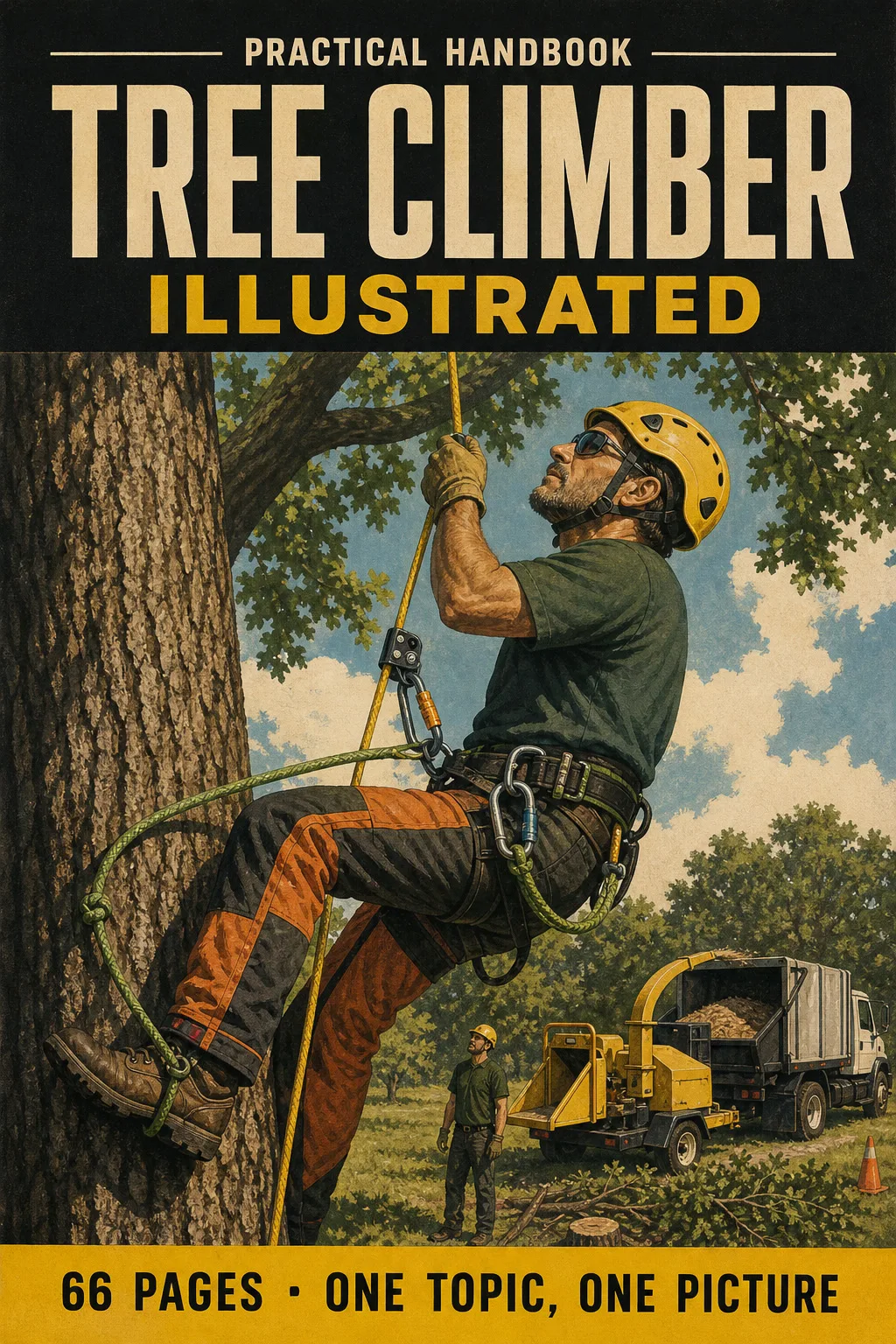
The Certified Tree Climber Exam in Drawings: See Every Setup, Then Say It in Z133 Terms One Topic on Every Page

Saddle and gear, knots and hitches, tie-in points, DdRT and SRT, chainsaw work aloft, rigging forces, approach distances and aerial rescue. Every topic gets its own page: first the drawing, then what you need to remember. 66 illustrated pages.

START STUDYING THIS WAY

🔒 Secure checkout · PDF by email · 30-day guarantee

Every topic, its own pageEvery knot, cut and climbing system drawn, with the explanation right beside it
66 illustrated pages9 parts, from the job and the exam to the final review
Up-to-date sourcesANSI Z133, ANSI A300 and OSHA 1910.269
PDF by emailFormat

Look Inside the Book

Every page has one big drawing and a box with the numbers and rules you need to know:

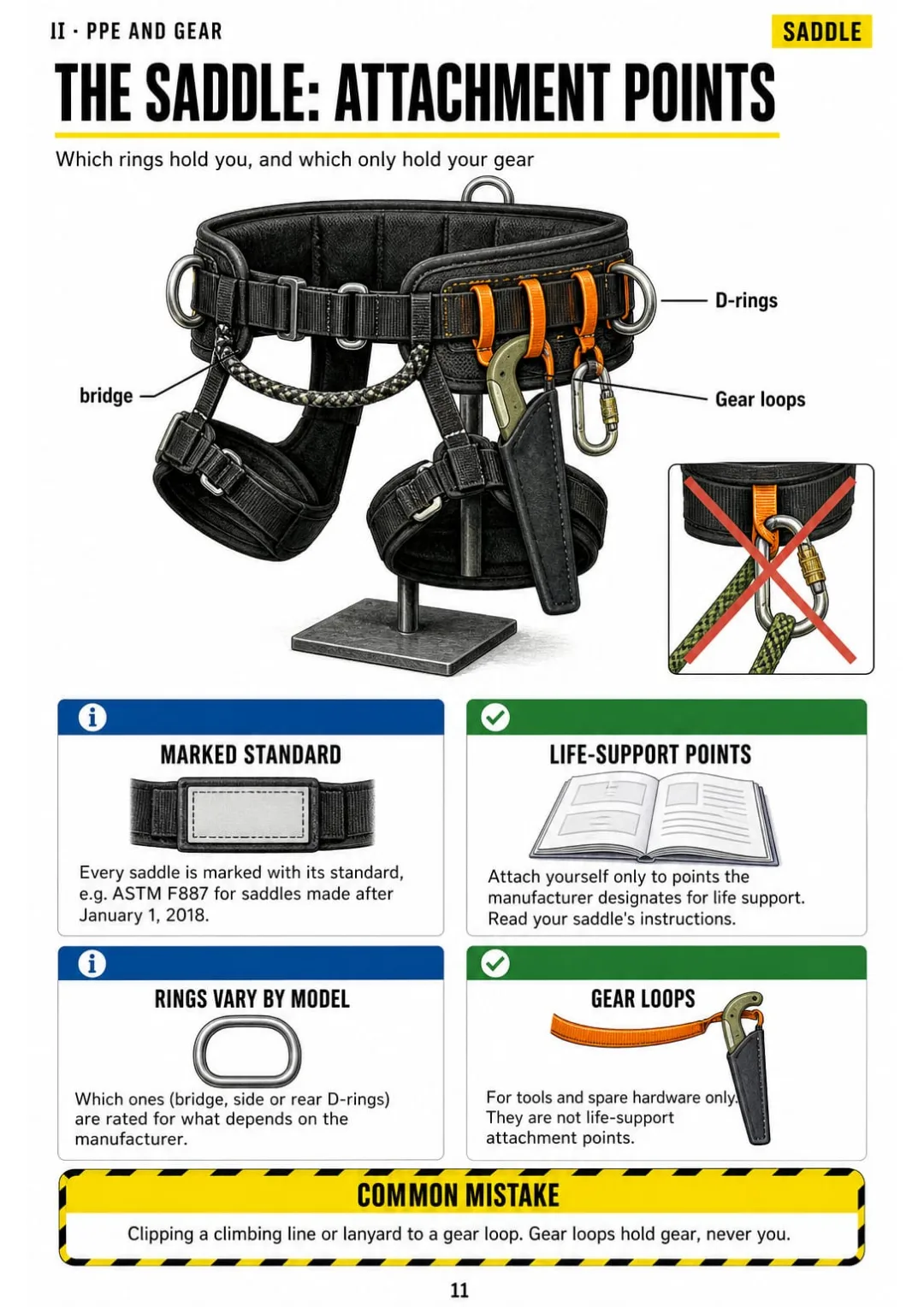
Life support goes only on the manufacturer-designated points; gear loops are for gear.
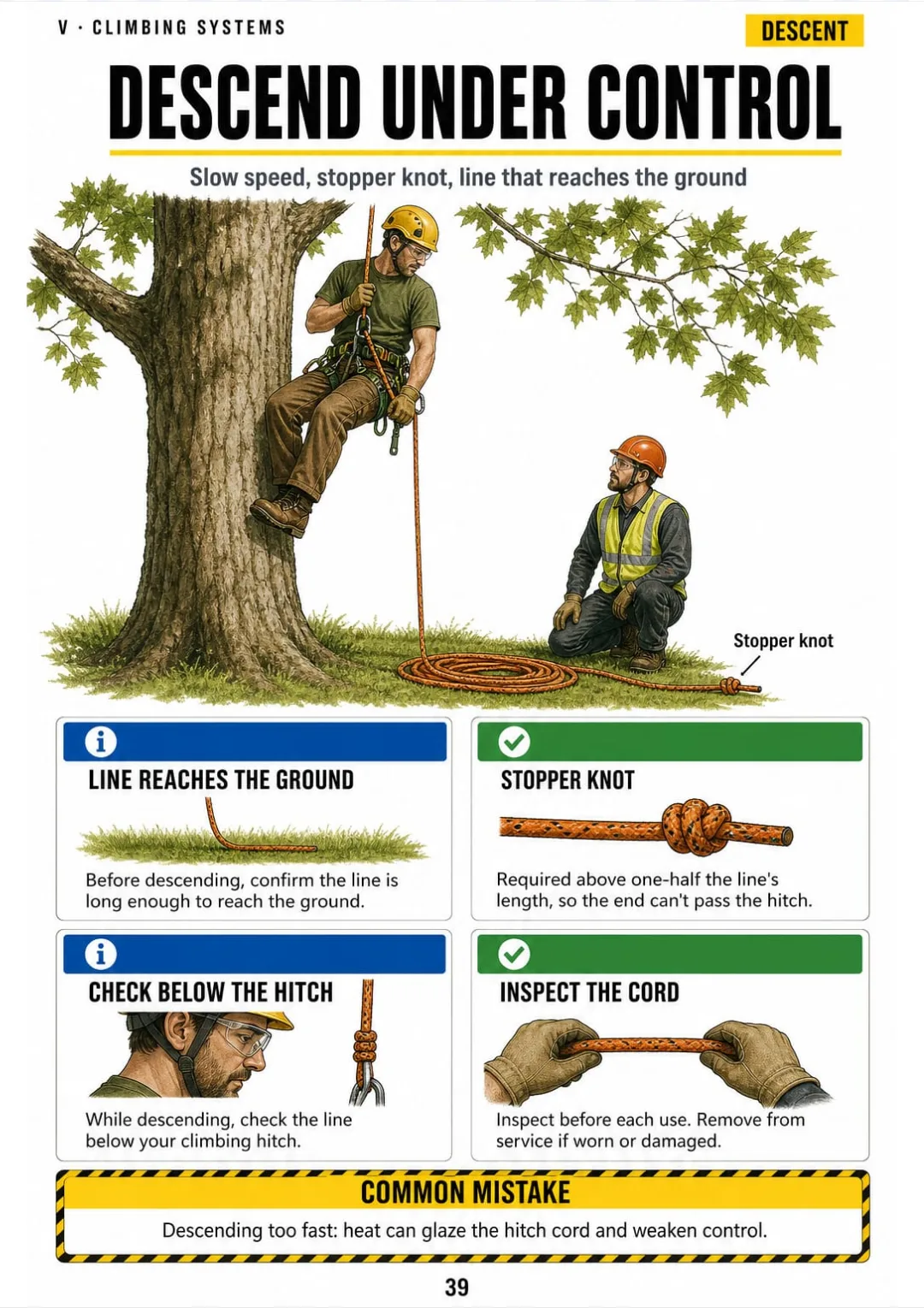
Controlled speed, stopper knot, and a line long enough to reach the ground.
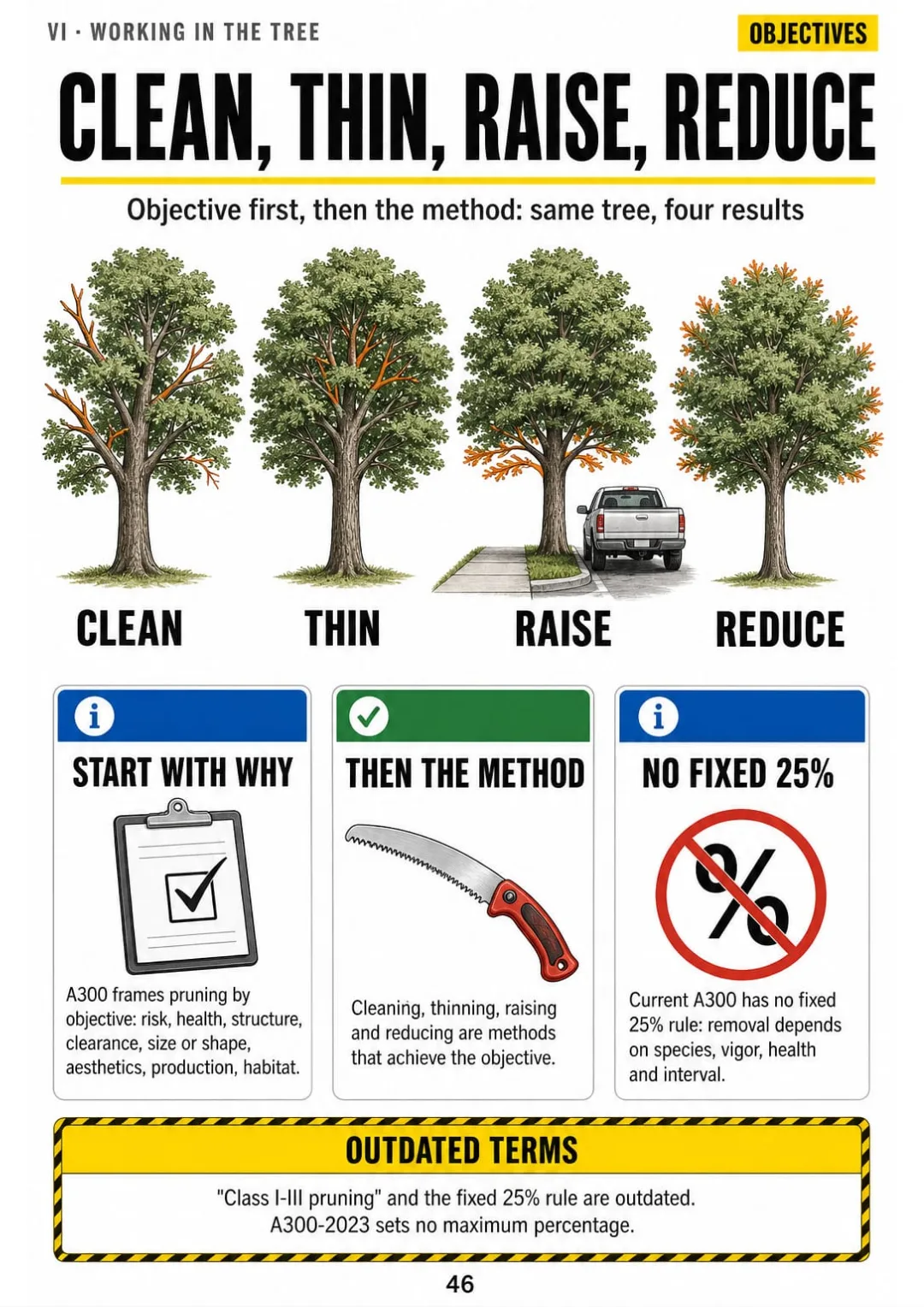
Clean, thin, raise, reduce: objective first (ANSI A300-2023)
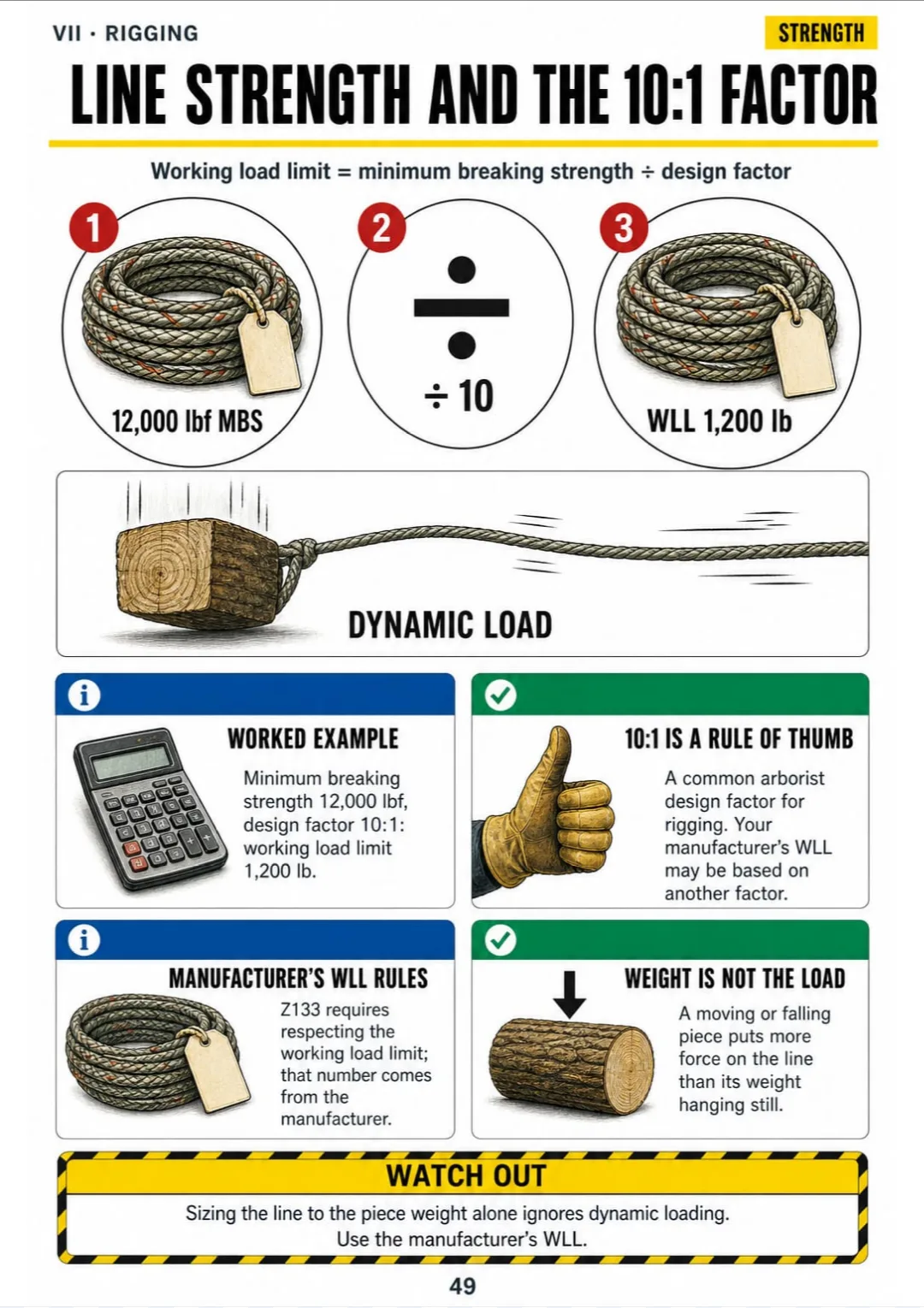
12,000 lbf ÷ 10 = about 1,200 lb working load, and why dynamic loads go higher
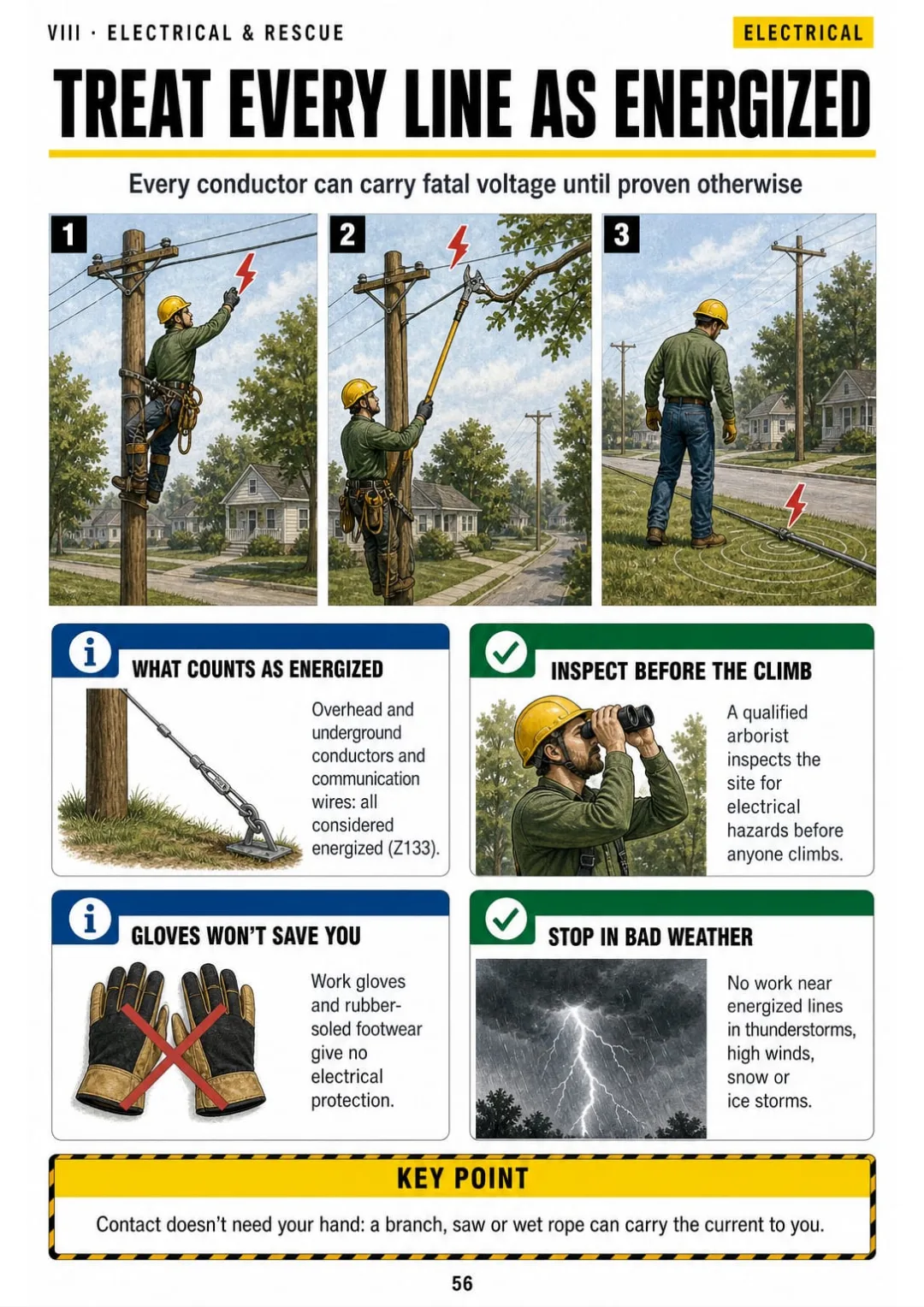
Direct, indirect and step contact: every conductor is treated as energized (ANSI Z133).
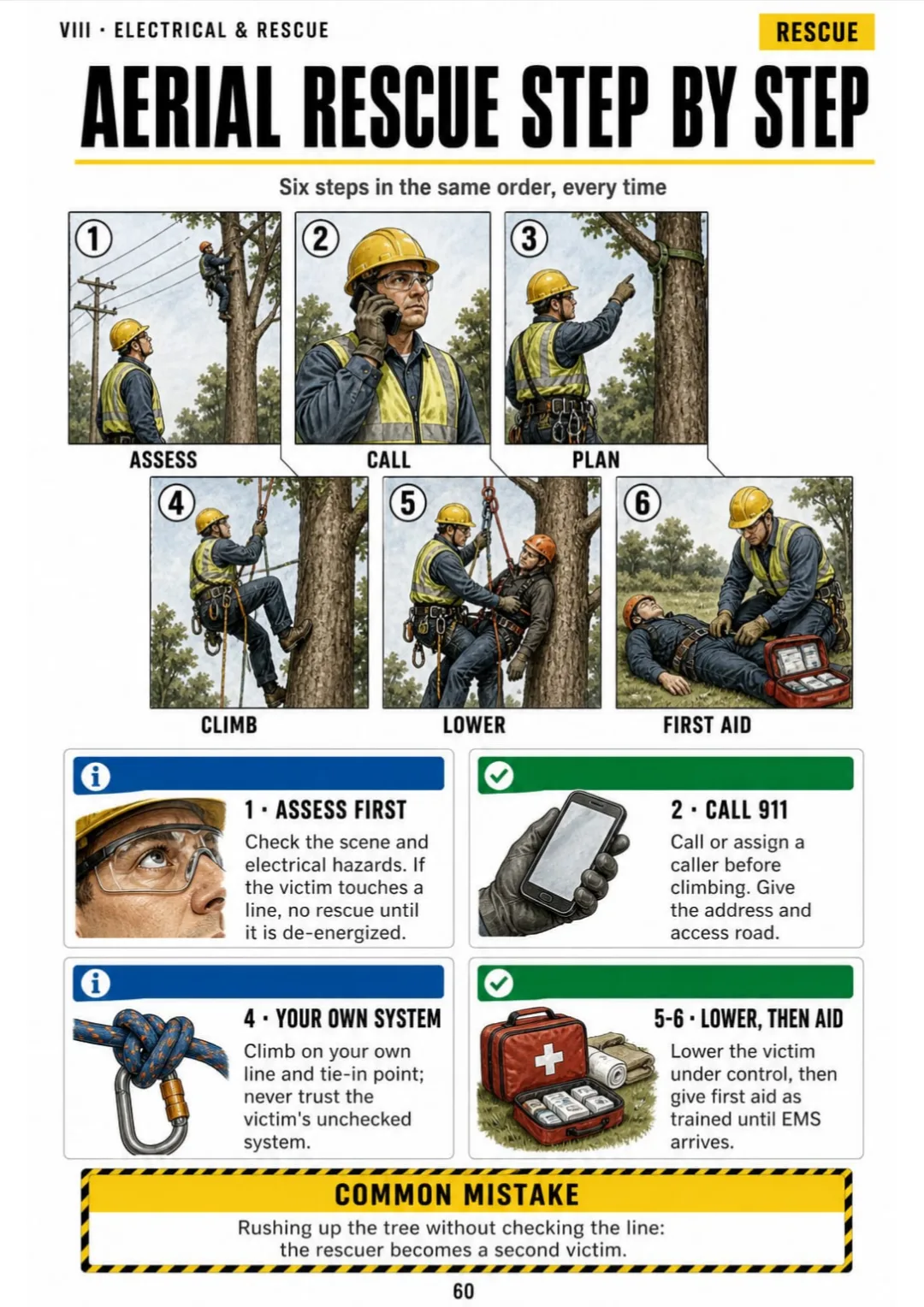
Aerial rescue in 6 frames: assess, call, plan, climb, lower, first aid.
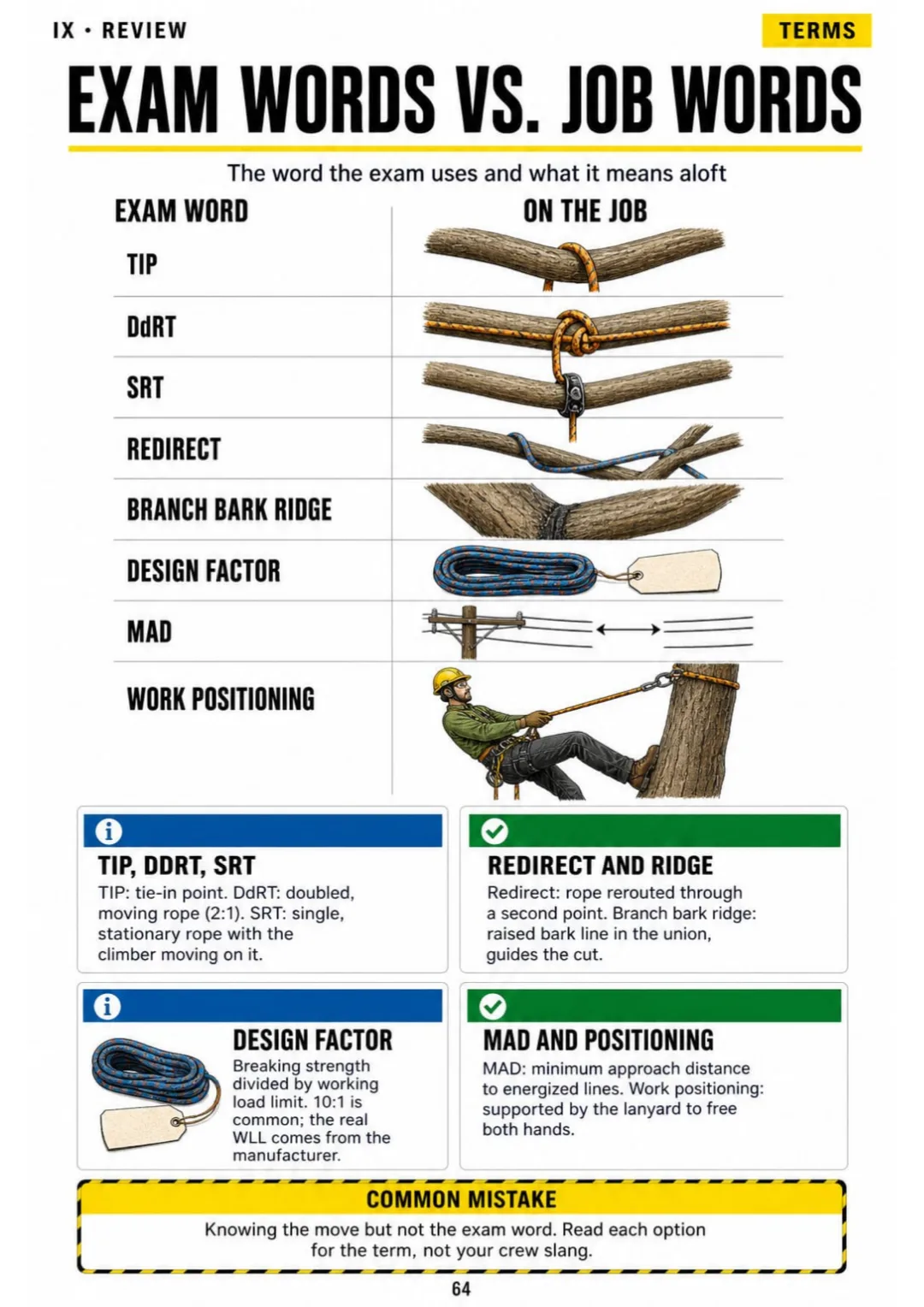
TIP, DdRT, SRT, MAD: eight exam words and what they mean on the job

Swipe to see more →

These are real pages from the book. The table of contents is the full one: 9 parts and 62 topics.

The Problem Isn't You. It's How It Was Explained to You.

Practice test, question 14: how do you have to be secured before you cut aloft? You've done it a hundred times 40 feet up. The standard's words don't come.

The Z133 covers it in a long paragraph about a second means of attachment, with conditions in between. You read it at night. By morning it's gone, because nothing showed you what it looks like in the tree.

Clean, thin, raise, reduce: objective first (ANSI A300-2023)

In the book it's one page: the climber drawn in the tree, the climbing line on one side, the second means on the other, and a box with the rule: two lanyards don't count.

The rest works the same way: saddle attachment points, the DdRT doubled rope, the 10:1 rigging factor, the 10-foot approach distance, aerial rescue in six frames. Each one has its own page.

You look at the drawing, you get it, and the next time it comes up, on the written test or 40 feet up, you answer it without opening the standard again.

COMPARE FOR YOURSELF

The Same Topic, Two Ways to Study It

THIS
  • The standard: line after line
  • Climbing systems explained only in words
  • You show up to the exam still unsure
In a doubled-rope technique (DdRT) system, the climbing line passes over or around the tie-in point and returns to the climber, where one end is terminated at the climber's saddle and the other leg is engaged by a friction hitch or mechanical device, thereby forming two legs of rope between the climber and the anchor. Because the climber's weight is distributed between both legs, each leg sustains approximately one-half of the static load, while the tie-in point receives approximately the full static load.
FOR THIS
  • The doubled rope in one drawing
  • The loads in a box
  • You see it and you get it
Controlled speed, stopper knot, and a line long enough to reach the ground.
CONTENTS

Take a Look at the 9 Parts and 62 Topics

The job and the exam, PPE and gear, knots and hitches, tree inspection and tie-in points, DdRT and SRT, working in the tree, rigging, electrical hazards and aerial rescue, and a final review: 66 pages, all illustrated.

IThe Job and the Exam · pp. 5-9
  1. What the Certified Tree Climber Credential Covers
  2. How to Read This Book: Same Order on Every Page
  3. ANSI Z133 vs. ANSI A300: Which Standard Says What
  4. Job Briefing Before Every Climb
  5. Command and Response: Talking to the Ground
IIPPE and Climbing Gear · pp. 10-17
  1. Head-to-Toe PPE for the Climber
  2. The Arborist Saddle: Attachment Points
  3. Climbing Line: 5,400 lbf and How to Inspect It
  4. Carabiners and Snaps: Self-Closing, Self-Locking
  5. Work-Positioning Lanyard
  6. Friction Hitch Cord, Hitch Climber Pulley and Micropulley
  7. Mechanical Devices for SRT
  8. Gear Inspection, Retirement and Storage
IIIKnots and Hitches · pp. 18-25
  1. Knot Vocabulary: Bight, Loop, Working End, Standing Part
  2. Bowline
  3. Running Bowline
  4. Figure Eight and Figure Eight on a Bight
  5. Clove Hitch and Half Hitches
  6. Blake's Hitch
  7. Distel Hitch
  8. Prusik and Timber Hitch
IVTree Inspection and Tie-In Points · pp. 26-32
  1. Inspecting the Tree Before You Climb
  2. Hangers, Dead Wood and Weak Unions
  3. Site Hazards: Drop Zone, Traffic and Structures
  4. Choosing a Tie-In Point
  5. Setting the Line with a Throwline
  6. Canopy Anchor vs. Basal Anchor
  7. Load on the TIP: 1x vs. 2x
VClimbing Systems: DdRT and SRT · pp. 33-40
  1. DdRT: How the Doubled Rope Works
  2. SRT: How the Single Rope Works
  3. DdRT vs. SRT: When to Use Each
  4. Ascent Methods
  5. Tying In and Staying Tied In
  6. Redirects and Limb Walking
  7. Descending Under Control
  8. Climbing Spurs: When They Are Allowed
VIWorking in the Tree · pp. 41-47
  1. Two Points of Attachment with a Chainsaw
  2. Chainsaw Use Aloft
  3. The Three-Cut Method
  4. Branch Collar and Branch Bark Ridge
  5. Pruning Cuts per A300: Removal and Reduction
  6. Pruning Objectives: Clean, Thin, Raise, Reduce
  7. Moving Through the Canopy Safely
VIIRigging · pp. 48-55
  1. Rigging Basics: Rigging Point, Block, Lowering Device
  2. Rigging Line Strength and the 10:1 Design Factor
  3. Rope Angle at the Block: Up to 2x the Load
  4. Shock Loading: Why a Short Drop Matters
  5. Friction Devices and Wraps
  6. Rigging Cuts: Notch and Hinge on a Limb
  7. Removals: Open-Face Notch and Hinge
  8. Ground Crew in the Drop Zone
VIIIElectrical Hazards and Aerial Rescue · pp. 56-61
  1. Treat Every Line as Energized
  2. Minimum Approach Distance: 10 Feet
  3. Line Clearance Is a Separate Qualification
  4. Aerial Rescue: The Plan Before the Climb
  5. Aerial Rescue Step by Step
  6. Suspension in the Harness: Why Time Matters
IXReview Before the Exam · pp. 62-66
  1. The Numbers to Remember on One Page
  2. The Knots Side by Side
  3. Exam Words That Trip Climbers Up
  4. Skills Test Walk-Through
  5. Most Common Mistakes Checklist

One Page, One Topic, All Clear

Think of it this way:

The evaluator stops you at the base of the tree and asks where your lanyard and your climbing line go before you start the saw. He's waiting, and the crew is watching.

In the book you open the page on two points of attachment and see the climber drawn in the tree: the climbing line, the second means, and the setup that doesn't count, each one marked.

Direct, indirect and step contact: every conductor is treated as energized (ANSI Z133).

Same with the bowline, the Distel, the load on the tie-in point, the 10:1 design factor and the 10-foot approach distance: each one on its own page.

Tree Climber Illustrated is 66 illustrated pages in 9 parts, one topic per page, and at the end you get the numbers on one page, the 8 knots side by side and a skills test walk-through.

What you see drawn, you don't have to memorize.

What's Inside Tree Climber Illustrated:

Ipp. 5-9

The Job and the Exam

What the credential covers, how every page is laid out, Z133 vs. A300, the job briefing and command and response with the ground.

IIpp. 10-17

PPE and Climbing Gear

Head-to-toe PPE, saddle attachment points, climbing line strength and inspection, carabiners, the lanyard, hitch cord and pulleys, SRT devices and when to retire gear.

IIIpp. 18-25

Knots and Hitches

Knot vocabulary, bowline, running bowline, figure eight, clove hitch, Blake's hitch, Distel, Prusik and timber hitch, each tied step by step.

IVpp. 26-32

Tree Inspection and Tie-In Points

Inspecting the tree, hangers and weak unions, site hazards, choosing and setting a tie-in point, canopy vs. basal anchor and the load on the TIP.

Vpp. 33-40

Climbing Systems: DdRT and SRT

How DdRT and SRT work, when to use each, ascent, staying tied in, redirects, limb walking, controlled descent and when spurs are allowed.

VIpp. 41-47

Working in the Tree

Two points of attachment with a saw, chainsaw use aloft, the three-cut method, the branch collar, A300 pruning cuts and objectives, moving through the canopy.

VIIpp. 48-55

Rigging

Rigging point, block and lowering device, the 10:1 design factor, rope angle at the block, shock loading, friction wraps, notch and hinge cuts and the drop zone.

VIIIpp. 56-61

Electrical Hazards and Aerial Rescue

Treating every line as energized, the 10-foot approach distance, line clearance, the rescue plan, rescue step by step and suspension in the harness.

IXpp. 62-66

Review Before the Exam

The numbers on one page, the 8 knots side by side, exam words that trip climbers up, the skills test walk-through and a common mistakes checklist.

At the end of the book: The climber's numbers on one page, the 8 knots side by side, a skills test walk-through and a common mistakes checklist.
Plus: 2 Free Books

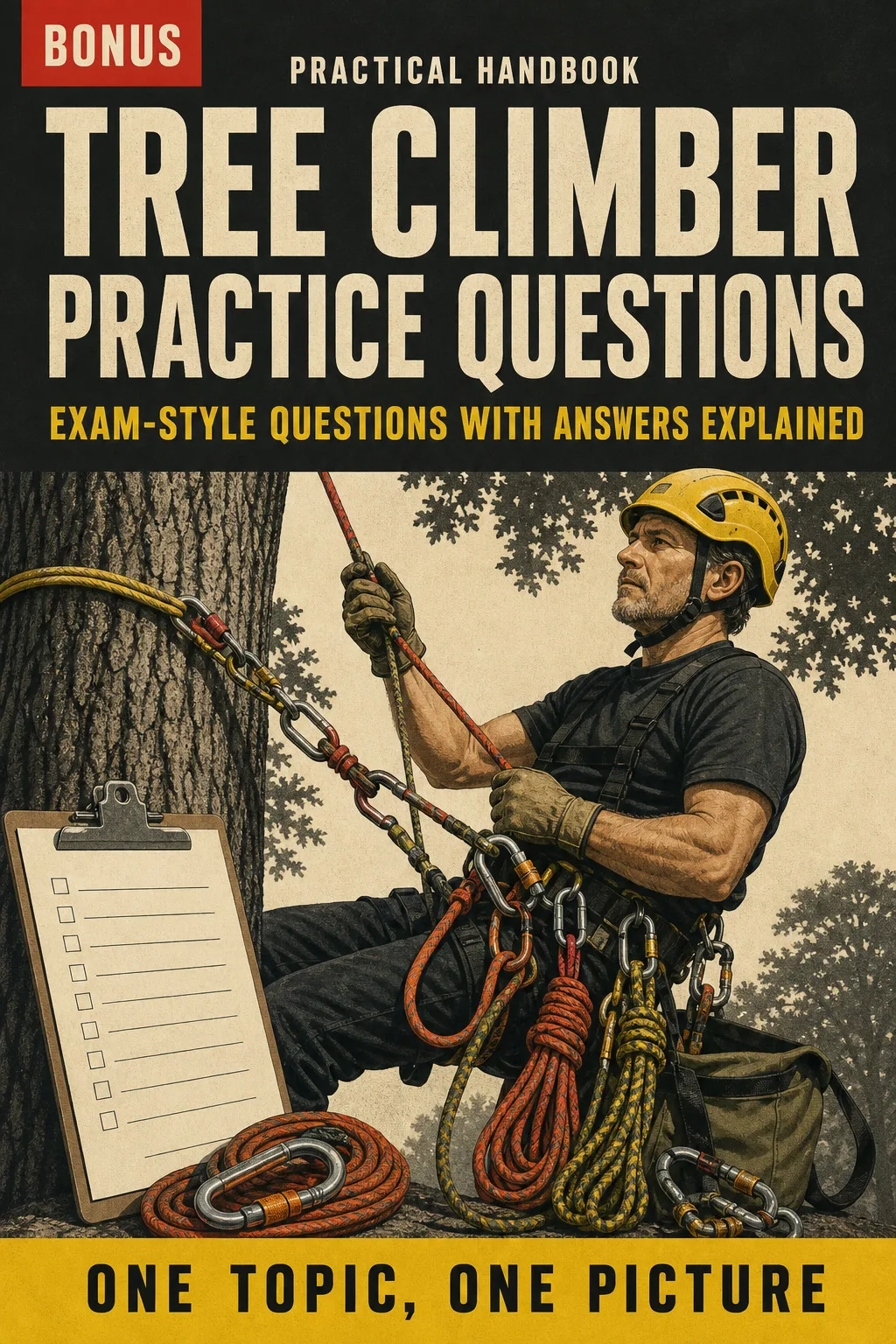
Tree Climber Practice Questions: exam-style questions with answers explained

BONUS 1: «Tree Climber Practice Questions: exam-style questions with answers explained»

Value on its own: US$ 17.90

Test yourself the way the written exam asks it. Every answer explains why, so you know what to go back and review.

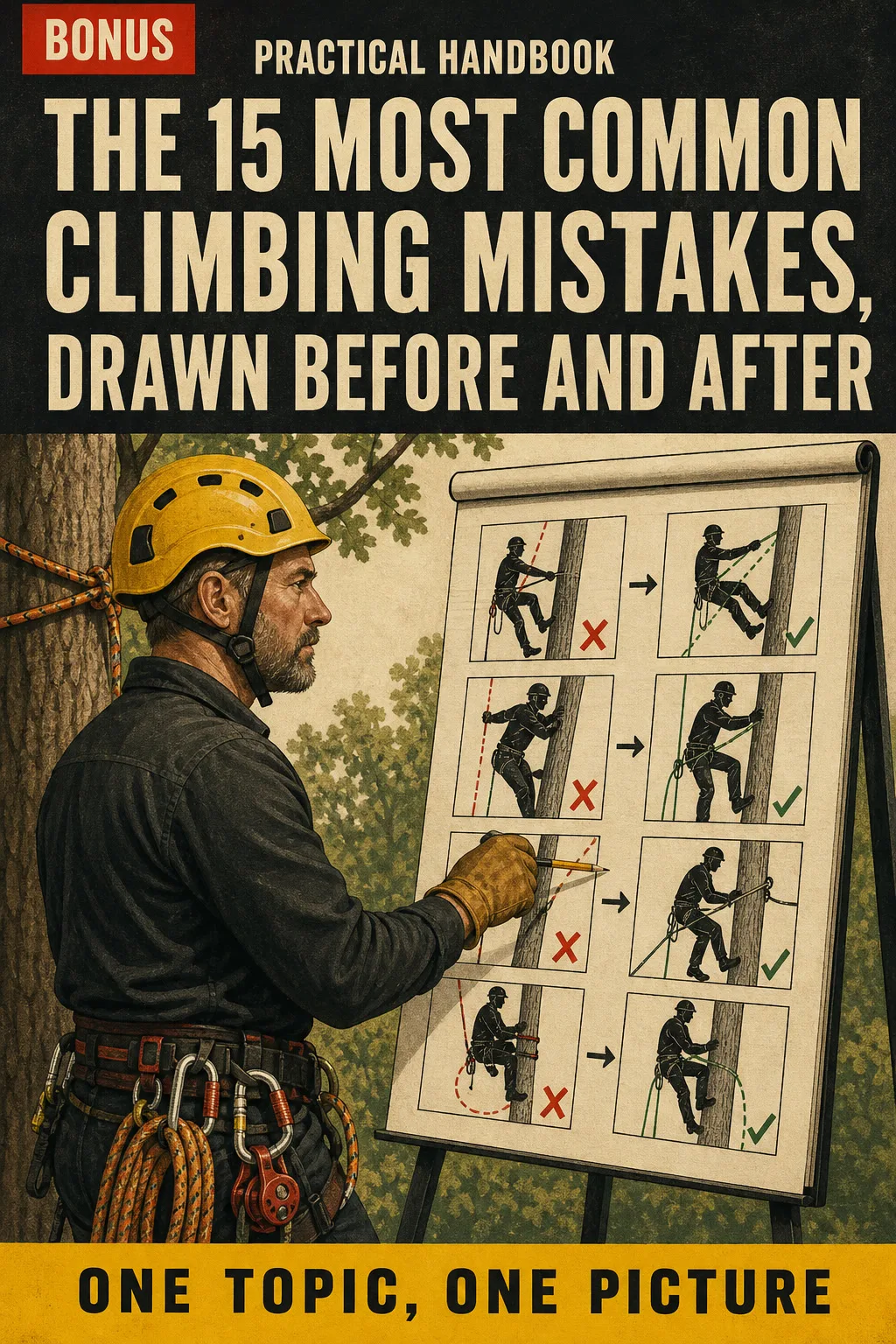
The 15 Most Common Climbing Mistakes, Drawn Before and After

BONUS 2: «The 15 Most Common Climbing Mistakes, Drawn Before and After»

Value on its own: US$ 14.90

See the wrong way and the right way side by side, from a bad tie-in to a cut that's too flush, so you catch them before the evaluator does.

Tree Climber Illustrated with 2 Free Books

  • Tree Climber Illustrated: 66 illustrated pagesUS$ 63
  • BONUS 1: Tree Climber Practice Questions: exam-style questions with answers explainedUS$ 17.90
  • BONUS 2: The 15 Most Common Climbing Mistakes, Drawn Before and AfterUS$ 14.90
  • High-resolution PDF to printIncluded
Total value US$ 95.80
YOUR PRICE:
US$ 27
You save US$ 68.80
YES, I WANT TREE CLIMBER ILLUSTRATED FOR US$ 27

📄 This is a digital PDF book sent to your email: nothing is printed or shipped.

Secure purchaseEncrypted payment30-day guarantee

PDF by email: We email you Tree Climber Illustrated as a PDF, together with the two free books. It's a single payment: no installments, no extra charges.

Who This Book Is For

You're moving up from the ground

You're moving up from the ground

You see every knot, tie-in point and system drawn before you trust it in the tree. You climb knowing why each piece goes where it goes.

Your exam date is set

Your exam date is set

You review the whole outline in the same order on every page, and you test yourself with the practice questions before the written exam.

You've been climbing for years

You've been climbing for years

You already do the work. The book puts it in the words and numbers the standard and the exam use, so nothing catches you off guard.

Everything You Get Today

US$ 95.80US$ 27
YES, I WANT TREE CLIMBER ILLUSTRATED FOR US$ 27

📄 This is a digital PDF book sent to your email: nothing is printed or shipped.

30DAYS
GUARANTEE

30-Day Guarantee

Try Tree Climber Illustrated for 30 days, bonus books included.

We refund everything if the file won't open, if the book isn't what you see here, if you were charged twice or if the email doesn't arrive. Just email us.

You pay once. No subscriptions.

Frequently Asked Questions

Is it for me if I've been climbing for years without the credential?

Yes. It doesn't teach you to climb from zero: it puts what you already do in the order, words and numbers the standard and the written exam use.

Where does the content come from?

From the current editions of ANSI Z133 and ANSI A300, the ISA Certified Tree Climber exam outline, and OSHA 29 CFR 1910.269 and 1910.333 for work near power lines. It covers both parts of the credential: the written exam and the skills test. Before your date, check the current exam format on ISA's website.

Is this official ISA material?

No. It's an independent study book, not affiliated with or endorsed by ISA or ANSI. It doesn't give you a certificate or the credential: you still register for and take the written exam and the skills test with ISA.

Does it replace climbing training?

No. It's study material, not a replacement for hands-on supervised training, your employer's procedures or your gear manufacturer's instructions. What it does: every knot is drawn frame by frame and every rescue step has its own frame, so you can keep the page next to the rope while you practice on the ground and check what you tie against the drawing.

Are the practice questions the ones on the exam?

No. They're written for this book, in the style of the written exam, and every answer explains why.

How do I get it?

As a PDF by email, sent to the address you enter at checkout: the book and the 2 bonus books.

Do I have to pay every month?

No. It's a one-time payment.

Can I have it on paper?

Yes. The PDF is ready to print, so you can keep it in the truck.

How does the refund work?

You have 30 days. We refund everything if the file won't open, if the book isn't what you see on this page, if you were charged twice or if the email doesn't arrive: just email us.

Before You Close This Page

No more rereading the standard with nothing sticking.

Two points of attachment with a saw: you see it drawn, and that's it.

You walk into the exam knowing where everything is.

Drawings make studying faster.

The book is right below.

One-time payment: US$ 27 · Guarantee: 30 days · PDF by email

YES, I WANT TREE CLIMBER ILLUSTRATED FOR US$ 27

📄 This is a digital PDF book sent to your email: nothing is printed or shipped.